
Marshall County Arrest Records and Charges
Arrest records are law enforcement records tied to an arrest or booking event. The official Marshall County Sheriff's Office page includes a jail roster with booking-related information for people in local custody, but the sheriff warns that the roster is generally updated in the morning, is not guaranteed accurate, and should not be relied on for legal action. The roster can show name, facility, age, booking date, charge text, statute, mugshot images for some entries, and an update stamp.
Court charges after arrest are different. The charge record begins when the prosecutor files a complaint or other charging document in Marshall County District Court. It can show count numbers, offense names, statutes, severity, bail or bond references, charge status, hearings, and later disposition. The full case outcome belongs in the criminal court records file, while custody and booking detail belongs with the jail roster.
The Marshall County Attorney is the local prosecutor for many state criminal cases.

The prosecutor role matters because an arrest by law enforcement does not itself decide what charge, if any, will be filed in court.
Find Marshall County Arrest Records
Use separate channels for arrest records and court charge records. The sheriff page is the official local custody source when a person is in the Marshall County Jail. MCRO is the court case source after charges are filed. The BCA Public Criminal History Search is a statewide conviction-history source, not an arrest database and not a complete case-file search.
For a recent arrest, timing can explain why sources disagree. A jail roster entry can appear before a court case is filed, while a court case can later show amended charges that no longer match the first booking text. A BCA conviction-history result may not appear until much later, if there is a qualifying public conviction at all.
- Check the Marshall County Sheriff's Office page or call the jail to confirm current custody.
- Use MCRO Case Search by case number when a court case number is known.
- If searching by name, remember pending criminal cases with no conviction may not appear by defendant name.
- Open the District Court case and read each charge count, statute, severity, and status.
- Use BCA Public Criminal History only for public conviction-history information, not arrest detail.
Questions about who is in custody should go to the sheriff or jail. Questions about court copies, charge status in a filed case, or certified case documents should go to Court Administration.
Charges After Arrest Documents
The formal court charge usually appears in a charging document. Minnesota research for this site identified the criminal complaint as the key charge filing in the court case record, while information and indictment are broader charging-document terms used in criminal procedure. The practical point for Marshall County users is that the court record begins with a filed charge, not merely with a booking entry.
| Document | Who files or authorizes it | What it does |
|---|---|---|
| Complaint | Prosecutor or authorized charging process | States the offense allegations and starts or supports the criminal court case. |
| Information | Prosecutor | Formal accusation used in some criminal procedures instead of an indictment. |
| Indictment | Grand jury | Formal accusation for serious matters when a grand jury process is used. |
The Minnesota Judicial Branch public defender page explains appointed counsel for eligible defendants facing jail exposure.
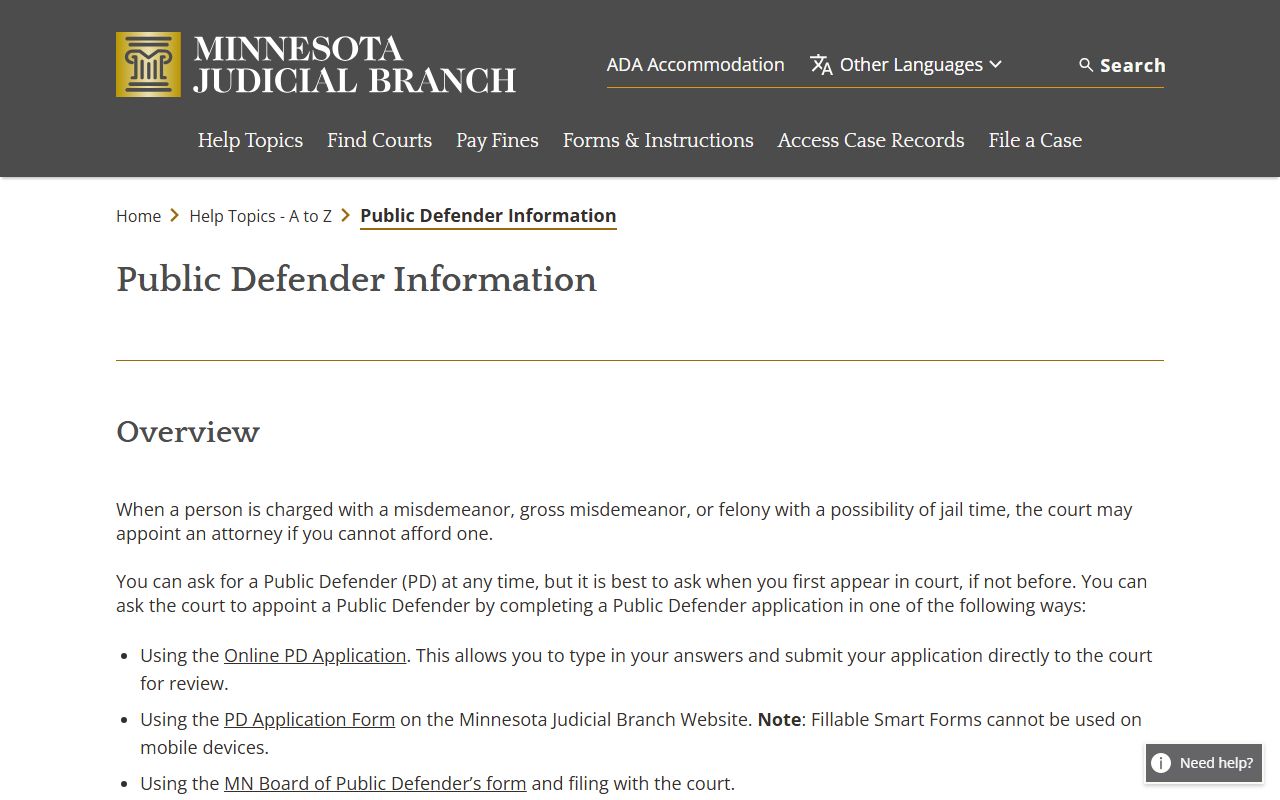
Public defender issues arise after charges because the right to counsel is tied to the court case and possible jail exposure.
Marshall County Charge Status
One arrest can lead to no charges, one charge, or several charge counts. Charge status can change as prosecutors review facts, parties file motions, plea talks occur, or the court enters orders. MCRO may show current status and docket events, but a certified copy or a courthouse confirmation is better for legal use.
| Status | What It Means |
|---|---|
| Pending | The charge remains open or unresolved in the court case. |
| Amended | The charge wording, statute, severity, or count may have changed by filing or court order. |
| Reduced | The charge was changed to a less serious offense or count. |
| Dismissed | The charge or case was ended by court action or prosecutor action. |
| Disposition entered | The court has recorded an outcome, such as conviction, dismissal, or other resolution. |
Charges vs Convictions
Being charged is not the same as being convicted. A charge is the accusation filed after arrest or citation. A conviction is a court outcome based on a guilty plea, verdict, or finding. A charge can be dropped, dismissed, amended, or reduced. A conviction can lead to sentencing, probation, fines, custody, or later expungement and sealing issues.
| Point | Charge | Conviction |
|---|---|---|
| Meaning | Offense allegation filed in court. | Finding, verdict, or plea establishing guilt. |
| Timing | Early in the criminal court case. | After plea, trial, or other court disposition. |
| Where to check | MCRO case record and charging document. | MCRO disposition, sentence, and BCA public criminal history when public. |
| Limit | May not appear by defendant name if pending with no conviction. | May be absent from BCA after statutory time limits or sealing. |
Statewide Charge and History Lookups
State systems answer different questions. MCRO shows public district court case information and available documents. BCA Public Criminal History shows public conviction data maintained by BCA, generally for 15 years after completion of sentence. DOC Locator shows adults committed to the Commissioner of Corrections, not all county jail detainees. DOC Public Registrant Search covers public notification registrants, not all registered offenders and not all arrests.
That distinction matters for Marshall County arrest records because a person can be booked, released, charged later, charged in a different county, or never charged in court. The sheriff roster is current-custody information, while BCA criminal history is conviction-history information. MCRO sits between those two points by showing the court case once a public case exists. A search that uses only one system can miss the other parts of the arrest-to-charge path.
The Minnesota Board of Public Defense office directory identifies Ninth District public defender contacts.
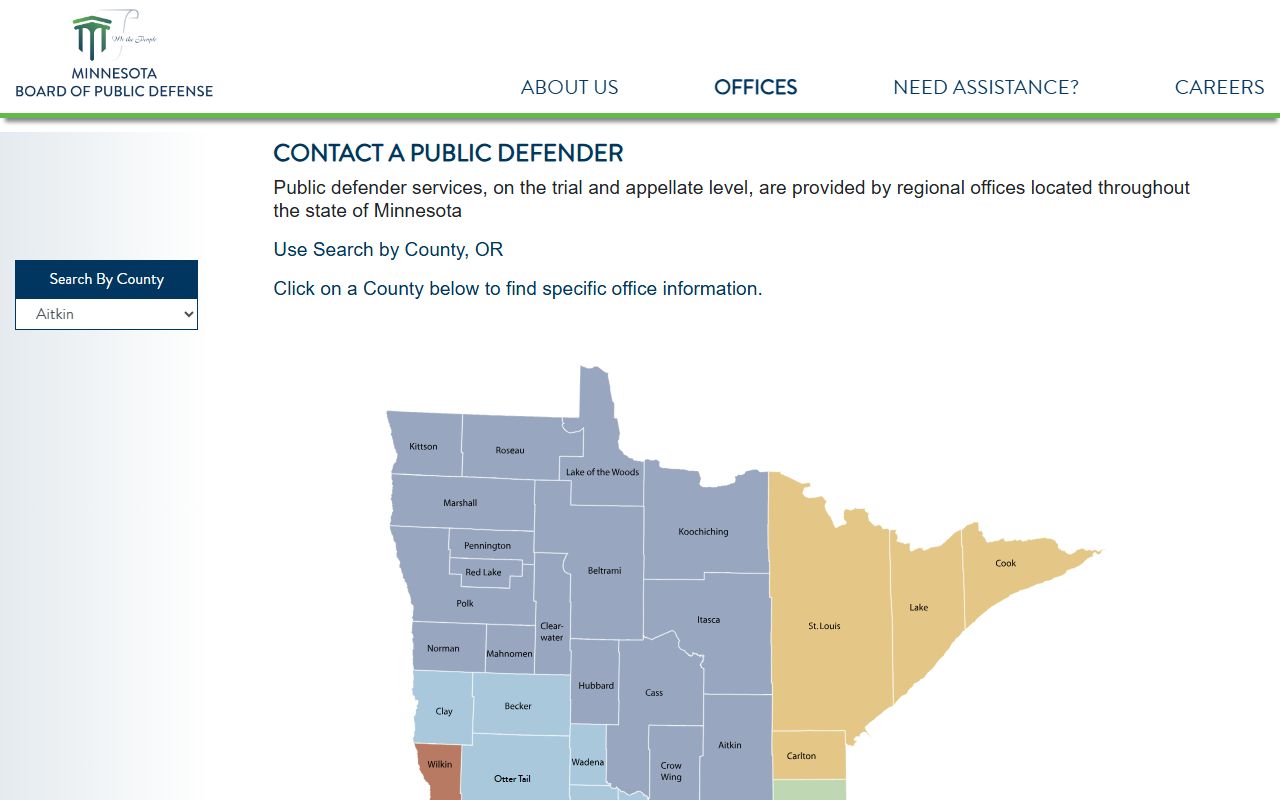
Use this source for defense-office routing, not for charge lookup or jail custody status.
Restricted Arrest Records and Charges
Public access has limits. Juvenile delinquency and juvenile protection records follow special Minnesota statutes. Domestic abuse, harassment, protected addresses, victim data, medical information, confidential treatment or evaluation records, and civil commitment materials can be restricted. MCRO also limits pending criminal name-search results when there is no conviction. Sheriff booking records may be subject to jail, juvenile, investigative, victim, medical, or other confidentiality rules under Minnesota data law.
| Point | Sealed | Expunged |
|---|---|---|
| Public visibility | Hidden from public access by law, rule, or court order. | Sealed from public view through expungement relief. |
| Record existence | The record still exists. | The record still exists; expungement does not destroy it. |
| How it happens | Confidentiality rule, statute, or court order. | Petition under Minnesota law or automatic Clean Slate process for qualifying records. |
| Practical step | Ask Court Administration about lawful access. | Check Judicial Branch expungement forms or automatic eligibility sources. |
The Minnesota State Law Library posts Marshall County legal referrals for local and regional help.
Legal referrals are useful when a person needs advice about a charge, warrant, expungement, or public defender issue.
Note: A court charge record can show an accusation that never became a conviction, so read the disposition before drawing conclusions.
Marshall County Charge Offices
The County Attorney is the local prosecuting office listed in the research. Christopher Rokke's office is at 423 N. Main St., Warren, with phone 218-745-4321 and fax 218-745-4320. The office may be involved in state criminal charging, juvenile, child protection, county civil representation, and victim-related matters, depending on the duty. The official page reviewed did not list prosecutor divisions, diversion programs, or current initiatives, so those details should not be assumed.
The public defender channel is separate from the prosecutor. Minnesota court information says a person charged with a misdemeanor, gross misdemeanor, or felony carrying possible jail time may ask for appointed counsel if unable to afford an attorney. The Minnesota State Law Library's Marshall County referral source lists the Ninth Judicial District public defender office in Thief River Falls for eligible criminal and juvenile delinquency cases. Charge records should therefore be read with both roles in mind: the prosecutor files or handles charges, while the defense lawyer represents the accused person.