
Marshall County Criminal Case Files
Criminal court records in Marshall County are maintained in District Court. Minnesota uses District Court as the trial court of general jurisdiction, so felony, gross misdemeanor, misdemeanor, petty misdemeanor, DWI, probation violation, sentencing, and related warrant or no-contact-order proceedings route through the same local court system. The Ninth Judicial District is the administrative district, but case filings and case-specific record questions go to Marshall County District Court.
The case file starts with charges and then tracks arraignment, hearings, motions, pleas, orders, disposition, and sentence. A charge-focused page can explain court charges after arrest, but the criminal court record is broader because it includes what happened after the charge was filed.
The Minnesota BCA Public Criminal History Search is a separate conviction-history source.
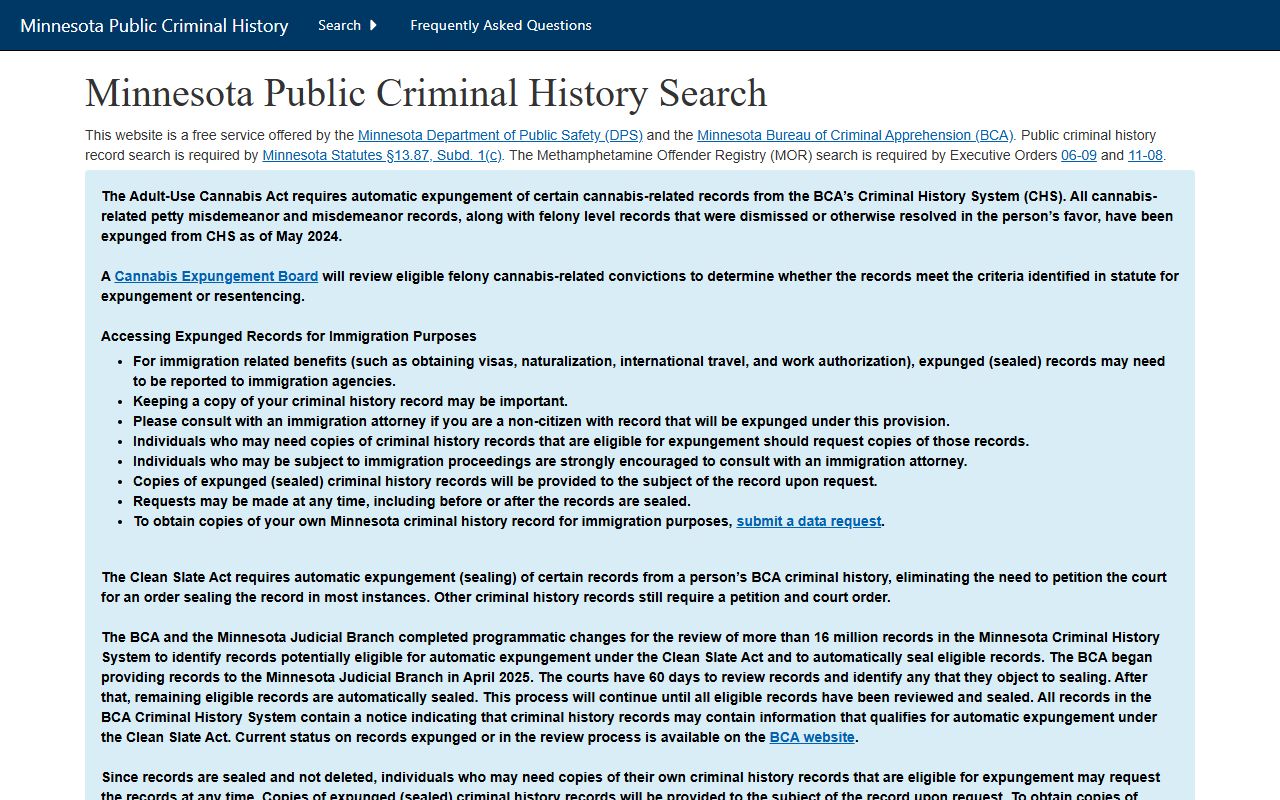
BCA results are useful for public conviction data, but they are not a substitute for the full District Court case file.
Search Marshall County Criminal Records
Start with MCRO Case Search for District Court records. Select Criminal under case category when filtering, and choose Marshall County under court locations. If a case number is known, use it. MCRO FAQ warns that pending criminal, traffic, and petty misdemeanor cases with no conviction will not return in Case Search Results or Hearing Search Results when searching by defendant name, though they may return by case number.
- Open MCRO Case Search and choose the best search tab.
- Use case number when available, especially for pending matters.
- Filter the case category to Criminal and the location to Marshall County.
- Open the case details and read the Register of Actions for hearings, filings, pleas, and orders.
- Request certified copies from Court Administration if a court-certified document is needed.
The Judicial Branch copy request page explains that MCRO documents are free when available, while certified copies come through court administration. Older or off-site records may not be same-day.
Marshall County Criminal Case Flow
A criminal court record is easiest to read as a process. The first entry may be a complaint or charge filing. Later entries can show arraignment, notices, pretrial hearings, motions, plea hearings, trial settings, disposition, sentencing, probation, fines, warrants, and review hearings. Each step may create a docket event, and some steps may create a public document if MCRO access rules allow online display.
Case flow: Charges Filed › Arraignment › Pretrial and Motions › Plea or Trial › Disposition › Sentencing
| Stage | What Happens |
|---|---|
| Charges Filed | The prosecutor files the complaint or charging document, and the case opens in District Court. |
| Arraignment | The defendant is advised of charges and rights, and plea or release issues may be addressed. |
| Pretrial and Motions | Parties file requests, address evidence issues, negotiate, or set the case for further hearing. |
| Plea or Trial | The charge is resolved by plea, trial verdict, dismissal, or another court-approved outcome. |
| Disposition | The current or final outcome is entered for the case or each count. |
| Sentencing | The court enters punishment or conditions such as custody, probation, fines, fees, or no-contact orders. |
What Marshall County Criminal Records Show
Criminal court records show the court's case-level history. The record may include the case number, defendant name, attorney, charge counts, statutes, severity, hearings, warrants or warrant flags, plea, disposition, sentence, probation, fines, and public documents. MCRO may hide party names or withhold documents when public access rules require it.
| Field | What It Shows |
|---|---|
| Case Number | Marshall County examples can begin with 45 and include CR for criminal case type. |
| Defendant | The accused person, unless a rule displays Name Not Available Online. |
| Charges | Offense names, statute references, count numbers, severity, and current charge status when shown. |
| Register of Actions | The docket event list for filings, hearings, orders, warrants, pleas, and judgments. |
| Plea | The defendant's formal answer or resolution entry for a charge. |
| Disposition | The outcome of a charge or case, such as conviction, dismissal, or other final status. |
| Sentence | Court-ordered custody, probation, fines, fees, conditions, or related orders after conviction. |
| Warrant Flag | A party-level alert that MCRO cautions may or may not relate to the case being viewed. |
Charges vs Convictions
A charge is an accusation filed in court. A conviction is a guilty plea, verdict, or finding that establishes guilt. A criminal court record can show charges that were amended, reduced, dismissed, or resolved without conviction. BCA public criminal history focuses on public conviction data, not arrest data and not every court event in a case file.
| Point | Charge | Conviction |
|---|---|---|
| Meaning | An accusation filed by the prosecutor. | A plea, verdict, or finding establishing guilt. |
| Where it appears | MCRO case record, complaint, sheriff roster when in custody. | Disposition, sentence, BCA public criminal history when public. |
| Can change | May be amended, reduced, added, or dismissed. | May later be sealed, expunged, appealed, or corrected by court order. |
The Minnesota criminal history data statute is the authority BCA cites for public criminal history access.
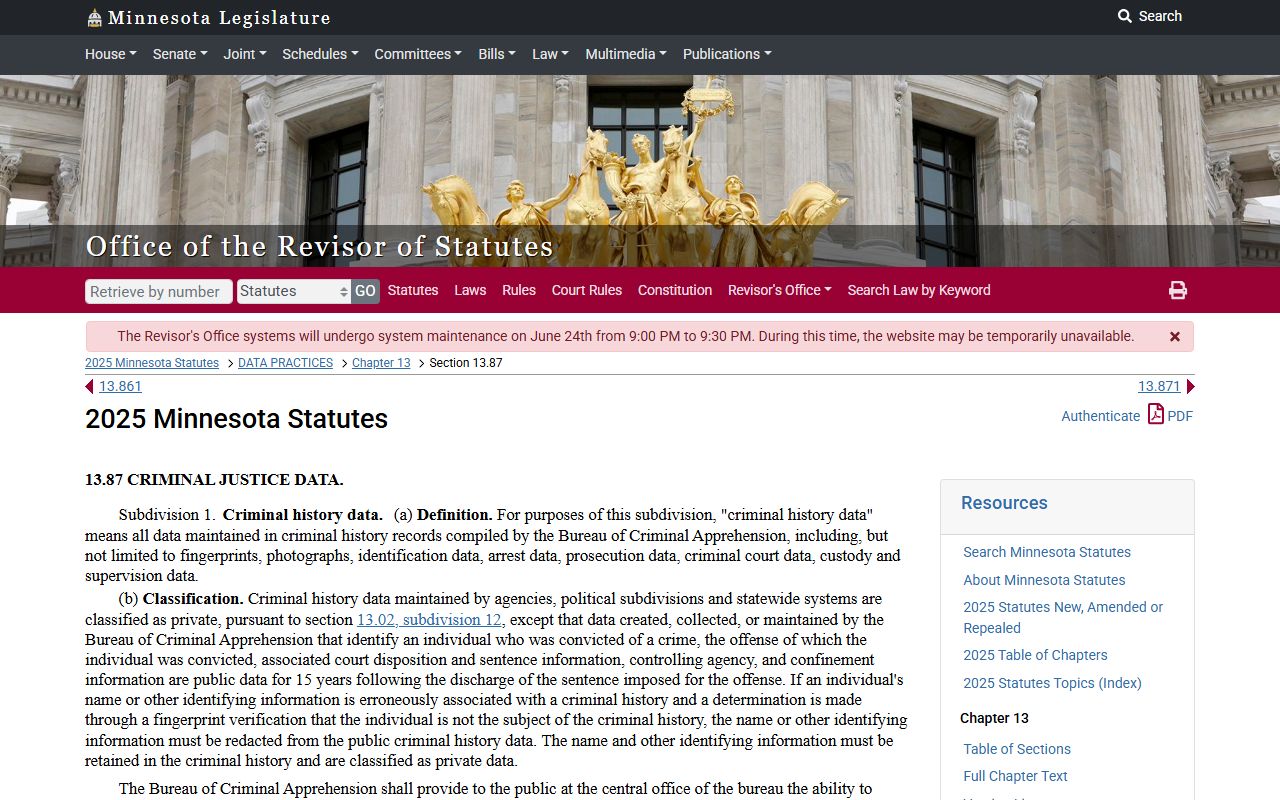
That statute helps explain why a conviction-history search is narrower than a full Marshall County criminal court record.
Marshall County Charging Roles
The local prosecutor is the County Attorney, not a District Attorney. The Marshall County Attorney page lists County Attorney Christopher Rokke. The office prosecutes many state criminal cases filed in District Court and may participate in juvenile, child protection, victim-related, and county civil advisory functions. The charging decision is separate from the arrest or jail booking entry.
Public defender access is also tied to the court process. The Minnesota Judicial Branch says a person charged with a misdemeanor, gross misdemeanor, or felony with possible jail time may ask for a public defender if unable to afford counsel. The Minnesota State Law Library lists the Ninth Judicial District public defender office in Thief River Falls as a Marshall County referral source.
Sealed and Expunged Criminal Records
Sealing and expungement affect what the public can see. Minnesota expungement seals a record from public view, but it does not destroy the record. The Judicial Branch criminal expungement help material explains petition-based sealing, while Clean Slate changes now allow some qualifying records to be sealed automatically without a petition.
| Point | Sealed | Expunged |
|---|---|---|
| Public visibility | Hidden from public access by rule, statute, or court order. | Sealed from public view through expungement relief. |
| Record status | The record still exists. | The record still exists; Minnesota expungement does not destroy it. |
| How it happens | Can result from confidentiality rules or a sealing order. | Can be petition-based or automatic for qualifying records. |
| Key sources | Public access rules and juvenile statutes. | Minn. Stat. sections 609A.03 and 609A.015. |
The Judicial Branch criminal expungement help page explains the court process.
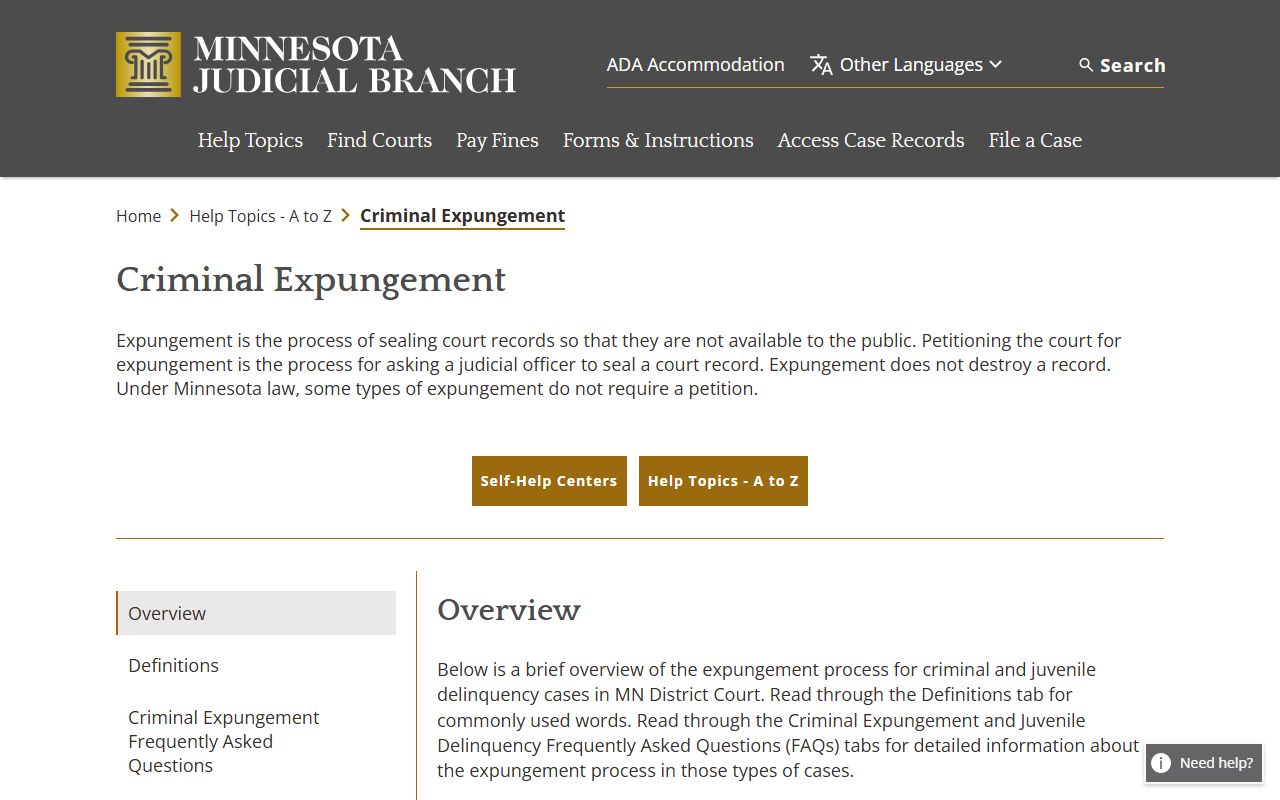
Use the court that handled the Marshall County case when a petition is required.
Marshall County Expungement Sources
Minnesota's petition statute is Minnesota Statutes section 609A.03. Automatic expungement eligibility is addressed in Minnesota Statutes section 609A.015. BCA reported Clean Slate implementation beginning in 2025, with review of records for possible automatic sealing. Cannabis-related BCA expungement work also affected certain petty misdemeanor, misdemeanor, and favorable felony-level records.
Minnesota's expungement petition statute is the core source for records that still require a court filing.
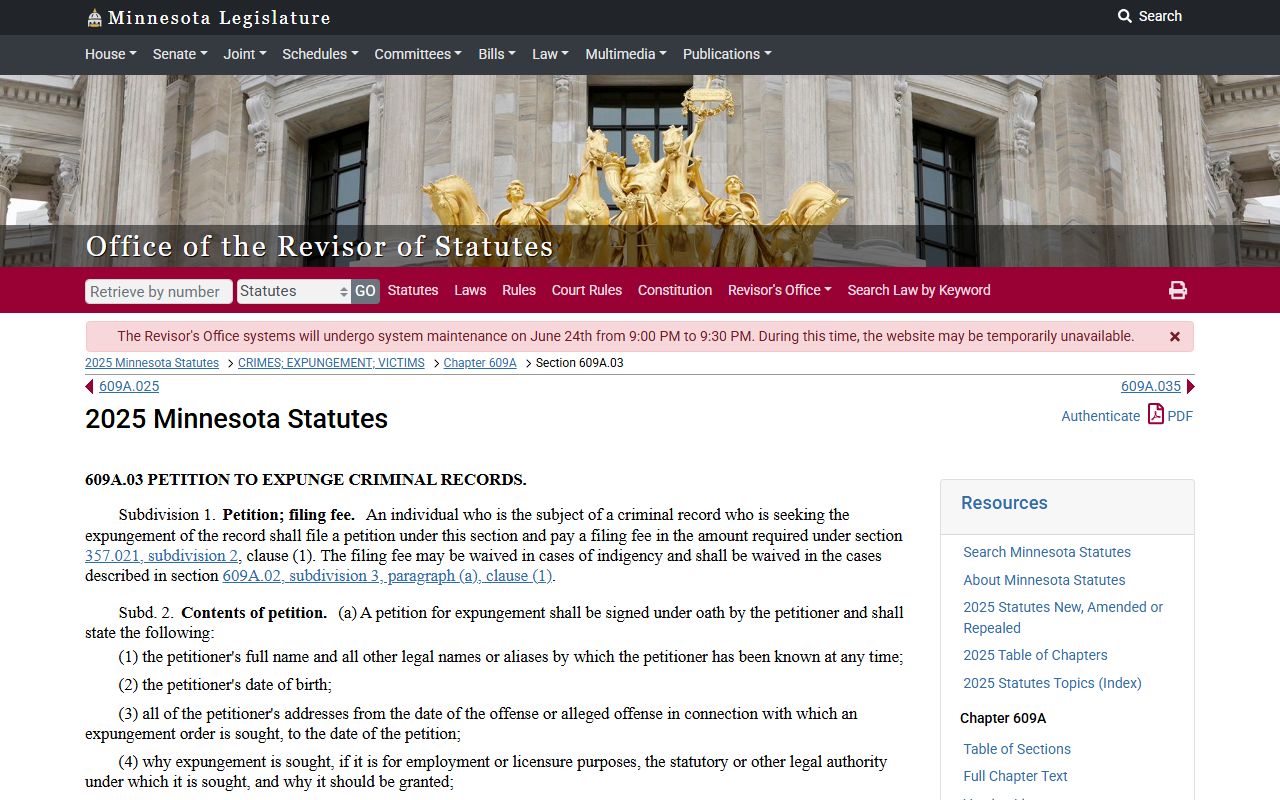
For a Marshall County case, petition-based relief generally ties back to the District Court case that created the criminal record.
The official criminal expungement forms page is the court form source.
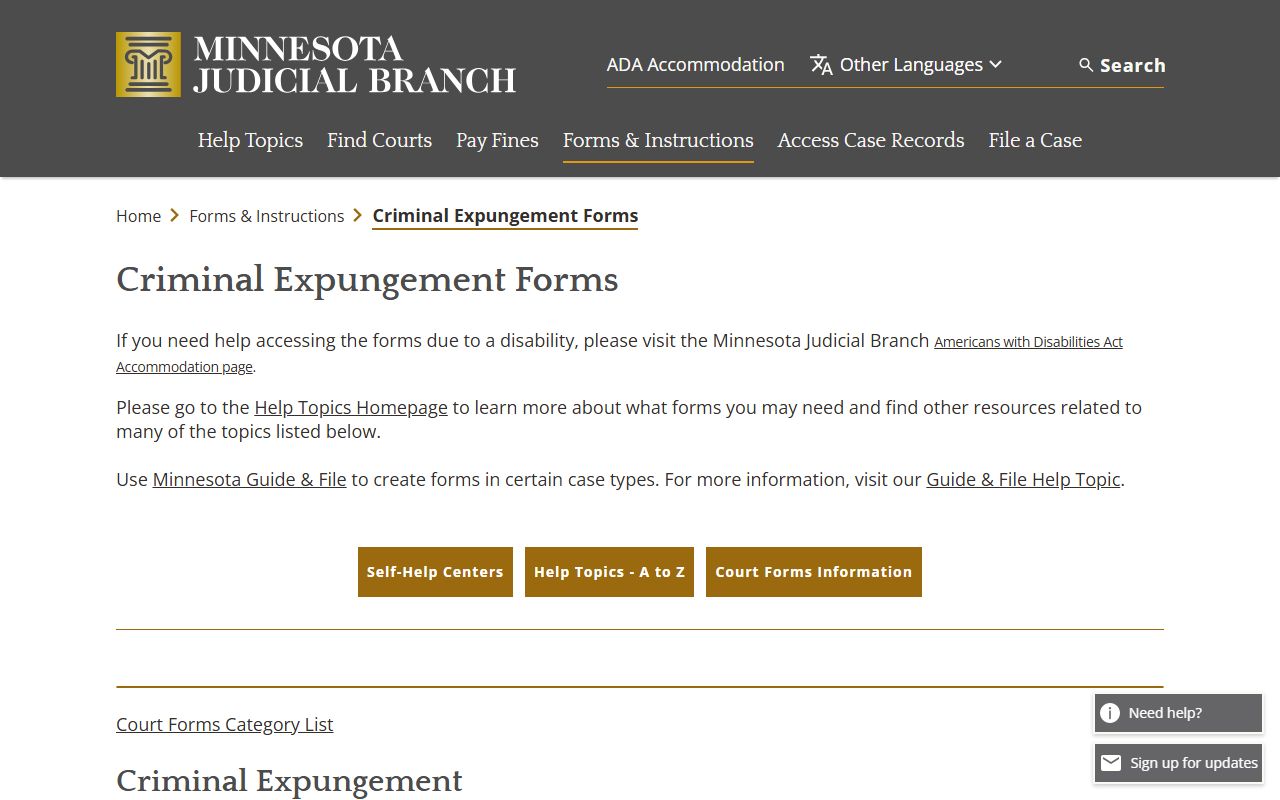
Forms, fee waiver requests, and agency service requirements should be checked against the current Judicial Branch instructions before filing.
Minnesota's automatic expungement statute is one source for newer Clean Slate relief.
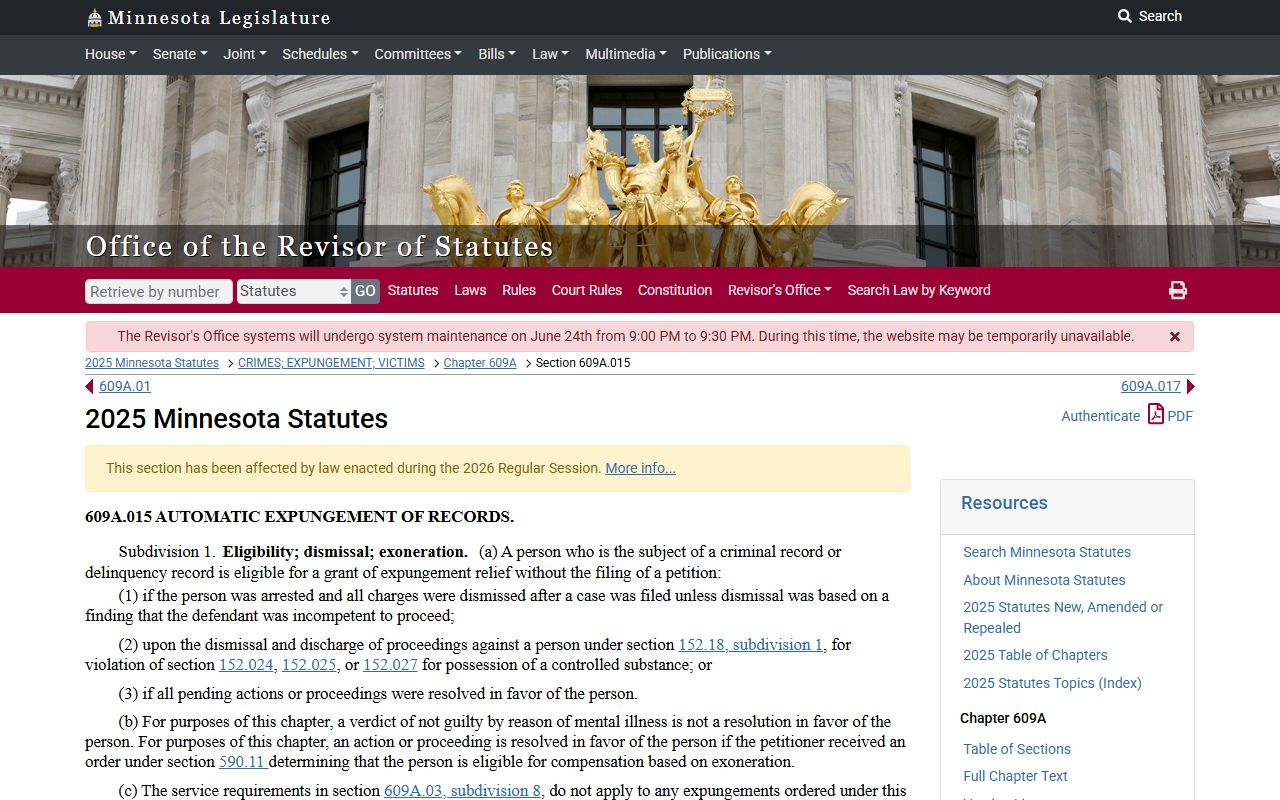
Automatic relief does not mean every Marshall County criminal record disappears from every public or agency system at the same time.
Public Access to Criminal Records
Criminal court records are public unless a rule, statute, or court order restricts access. Minnesota Rule of Public Access 4 identifies categories not accessible to the public. Juvenile delinquency records and juvenile protection legal records follow special statutes, and MCRO limits pending criminal name searches when there is no conviction.
For statewide conviction-history checks, use BCA Public Criminal History. It contains public conviction data for 15 years after sentence completion. It does not include arrest data, juvenile data, other-state history, federal data, older post-sentence-completion conviction data, or other private or confidential data.
Note: Use MCRO for the court case file and BCA for public conviction-history data; the two systems answer different questions.